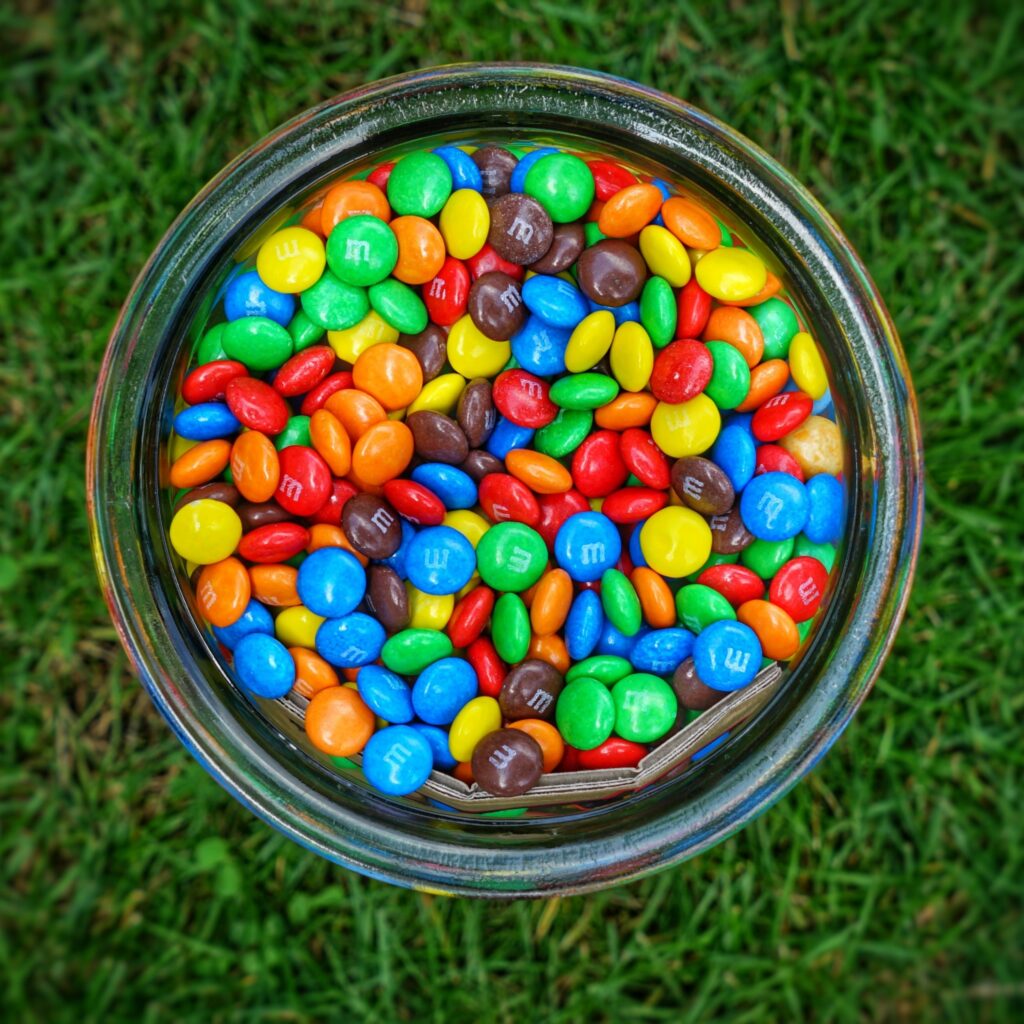
Everyone will be familiar with M&Ms, a delicious chocolate treat with fun mascots and a giant shop in the middle of London. In recent news, Mars Wrigley, the owner of the M&M brand, has announced that the beloved mascots – particularly the Green M&M – will be having a makeover. While this may not seem like notable news, the internet has exploded with the announcement of a new design for a beloved mascot that has long been the centre of memes and marketing ploys galore.
Who is the Green M&M?
The Green M&M is a familiar figure in internet pop culture. Many people satirised her sultry look and white go-go boots, but she remained a beloved figurehead of the M&M brand. The comedic value of a bizarrely sexy M&M was not lost on the internet, and the alluring Green M&M was the source of many jokes.
The changes to the character design are small but have caused shockwaves across the internet. Instead of her iconic white boots, the Green M&M will now sport a pair of white trainers, and her new character biography describes her as being a hype woman for her friends. This move is part of Mars Wrigley’s attempts to make the M&M brand more inclusive, and Green intends to reflect confidence and empowerment as a strong female.
The Brown M&M – the only other woman in the M&M group besides Green – has also received a minor change to her look. Her classic heels remain, but the height has been lowered to a sensible kitten heel. The male M&Ms haven’t had many visual changes. Still, their personalities are slightly different – The Red M&M is nicer to his friends, and the Orange M&M embraces his true, albeit anxious, self.
The Response
Although it seems reductive to be angry or sceptical at the change of outfit of a fictional chocolate character, many people took to Twitter to share how they felt about the changes. Tucker Carlson, a Fox News host, condemned the evolution of the Green M&M as less sexy, despite the only significant difference being her shoes.
Denizens of the internet widely mocked the decision online, but the M&M brand took it in good humour. The official M&M Twitter account posted several Tweets replying to their audience, joking that the Green M&M had been wearing her go-go boots for twenty years and deserved at least a few days off. Other commenters made jokes about the Green M&M being spotted with Pete Davidson (a reference to his colourful dating history), with some posts racking up hundreds of thousands of likes.
Rebranding Gone Wrong?
This may seem like a case of a rebrand gone terribly wrong at first glance. In a press release from Mars Wrigley, the decision to change the design of the characters stemmed from a desire to make the characters more inclusive and progressive, and changing the Green M&M from boots into trainers is a visual representation of giving her a more modern look.
The brand response to this social media firestorm has been exceptional; however, instead of shying away from the criticism, Mars Wrigley has leaned into it and used their Twitter account to engage with their audience and push the brand name back into the minds of millions around the world.
Many think this shift is a way to reach the Gen Z market in a swing-and-miss move, with the M&M brand completely missing the base for what the younger generation is looking for within their brands. However, it seems to have grabbed the attention of almost everyone on the internet, effectively giving M&Ms millions of dollars of free marketing.
Brand Activism
Some have criticised the decision to change the design of the M&Ms as a performative action – one that is simply designed to make a token gesture to appease younger audiences who prioritise inclusivity. Although Mars Wrigley described their inclusivity initiatives in their press release, the simple change to the characters designs comes across as a weak way to appeal to a broader audience.
This activism may fall flat as the Mars Wrigley company has been embroiled in several international issues in recent years. They have been heavily criticised for using child labour when sourcing cocoa for their products, and a lot of their cocoa was also found to have been grown illegally in African national parks. Changing a character design to promote inclusivity may be viewed as ineffective in the face of such extreme controversies.
Brand activism is something that is becoming to be expected. Many brands incorporate activism into their brand ethos, from Ben & Jerry’s ice cream to Patagonia’s outdoor wear. As Gen Z grows in buying power, more brands pick up on their values and morals and change their own to grow with them.
A report from Deloitte has shown that activism in companies have higher market share gains and grow faster than their competitors while increasing customer satisfaction. As young people develop an increasing sense of purpose, brands changing to become purpose-driven are the ones that see the best results.
Conclusion
The change to the M&M design is a lesson to be learned for all brands and marketers. The worldwide reaction to the rebrand was equal parts hilarious and unexpected for such a minor change, and the brand response from M&Ms by leaning into the humour and using their platform to engage with their audience and bring the brand name into the centre of the public eye was interesting to observe.
However, this change also shows the darker side of brand activism. While this activism can be a good thing, it can be seen as an attempt to cover up controversies and capitalise on a new generation with a platform of equality and acceptance.
Becoming a purpose-driven brand is more than surface deep, and the new generation of consumers won’t forget the brands that miss the mark.